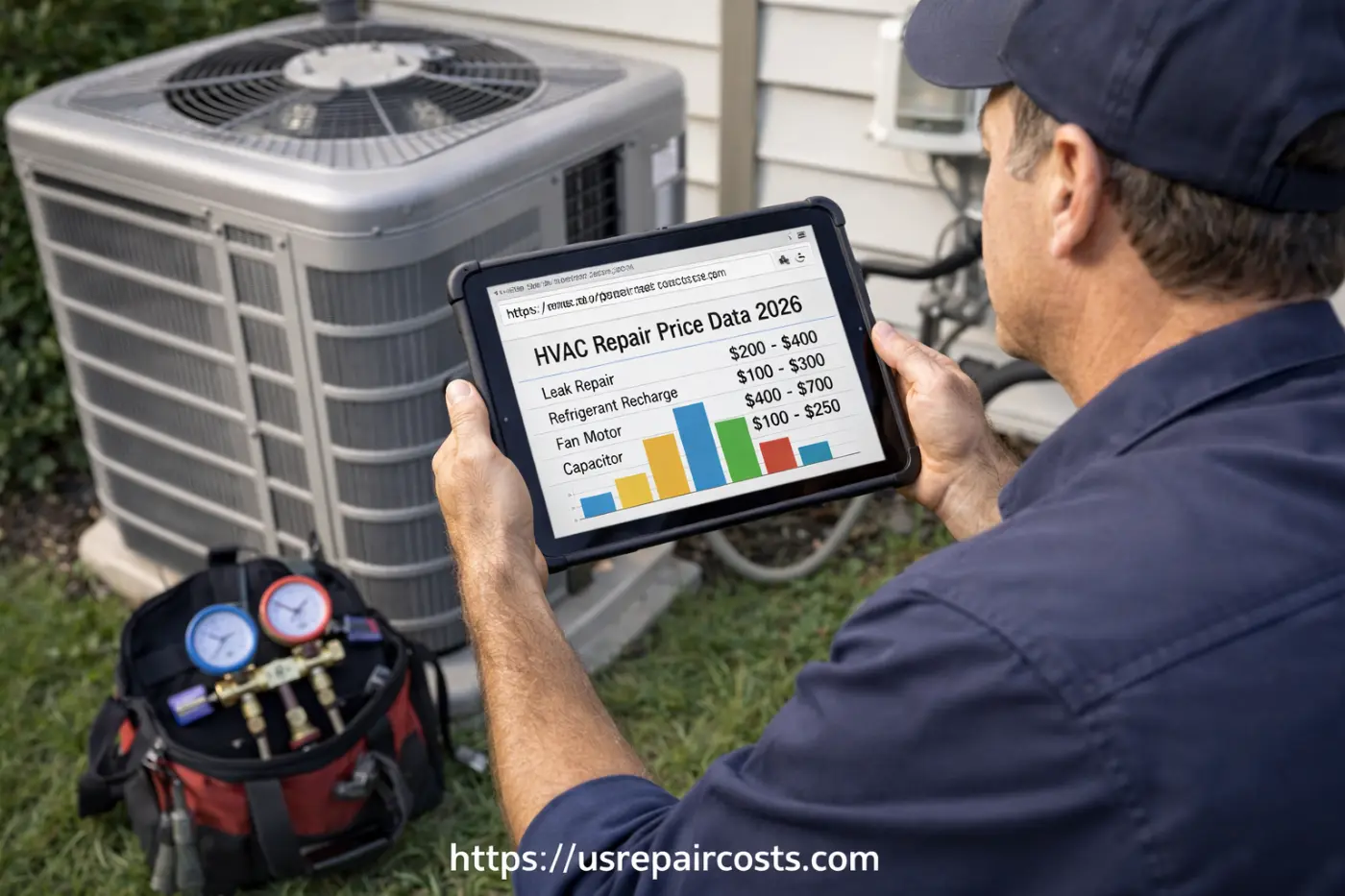
Discover the average HVAC repair cost in the US for 2026. Detailed price breakdown for AC compressors, furnace blowers, refrigerant leaks, and labor rates.
Dealing with a broken air conditioner in the middle of July or a malfunctioning furnace in January is stressful, and the primary concern for most homeowners is the potential HVAC repair cost. In 2026, the heating, ventilation, and air conditioning industry continues to see price fluctuations driven by refrigerant regulations, labor shortages, and equipment efficiency standards. Understanding these costs upfront allows you to budget effectively and determine whether a repair is worth the investment or if a system replacement is the smarter financial move.
We have gathered the latest data to provide a comprehensive look at what you can expect to pay for standard HVAC services across the United States. While national averages serve as a helpful baseline, your specific location, the age of your system, and the complexity of the diagnosis will always influence the final invoice. Costs listed are national averages and estimates intended to guide your research.
Quick Cost Overview: Labor vs. Parts
| Expense Category | Estimated Cost Range |
| Diagnostic / Service Call Fee | $75 – $200 |
| Hourly Labor Rate (Licensed Tech) | $100 – $175 per hour |
| Capacitor Replacement | $150 – $450 |
| Thermostat Replacement | $120 – $350 |
| Blower Motor Repair | $400 – $900 |
| Refrigerant Recharge (R-410A) | $100 – $250 per pound |
| Compressor Replacement | $1,200 – $2,800 |
| Emergency/After-Hours Fee | Additional $100 – $300 |
Average HVAC Repair Cost in the US
The national average HVAC repair cost typically falls between $250 and $600 for routine fixes. However, this average is heavily skewed by minor maintenance tasks. When major components fail, bills can easily exceed $1,000.1
Homeowners should view HVAC service pricing in three distinct tiers:
- Minor Repairs ($100 – $350): These are quick fixes that often involve replacing small electrical components or sensors. Examples include replacing a start capacitor, cleaning a flame sensor, or unclogging a condensate drain line. These jobs usually take less than an hour once the issue is diagnosed.
- Moderate Repairs ($400 – $900): These repairs involve more expensive parts or labor-intensive diagnostics. Common examples include replacing a condenser fan motor, fixing a refrigerant leak (repair only, not recharge), or replacing a circuit control board.
- Major Repairs ($1,000 – $3,000+): These are significant investments. Replacing an AC compressor, a heat exchanger in a furnace, or an evaporator coil falls into this category. At this price point, many technicians will advise comparing the repair cost against the price of a brand-new unit.
It is standard practice for HVAC companies to charge a diagnostic fee (or service call fee) ranging from $75 to $200. This covers the technician’s time and travel to identify the problem. Many providers will waive this fee if you choose to proceed with the recommended repair, but this is not a universal rule.
What Impacts HVAC Repair Costs?
Several variables cause the wide range in pricing. When you receive a quote that seems higher than the “average” HVAC repair cost, one of the following factors is likely driving the price up.
1. System Age and Type
Older systems often require parts that are no longer in mass production, making them harder to source and more expensive.2 Furthermore, if you have an older AC unit that uses R-22 (Freon), costs will be astronomical. Since the US phased out R-22 production, the limited supply makes recharging these units incredibly expensive ($300+ per pound), often pushing homeowners toward full system replacement.
2. Accessibility of the Unit
If your furnace is in a spacious basement, labor costs remain standard. However, if your air handler is located in a hot, cramped attic or a tight crawl space, technicians may charge a premium for the difficult working conditions. Similarly, outdoor units located on rooftops (common in urban row homes) may require two technicians or even a crane, significantly increasing the labor hours.
3. Seasonality and Timing
The HVAC industry is highly seasonal.
- Peak Season: During extreme heatwaves or freezing snaps, demand spikes. Companies may charge higher rates due to the sheer volume of calls.
- Emergency Service: If your heat goes out on Christmas Eve or your AC fails on a Sunday in July, expect to pay emergency rates. These are typically 1.5x to 2x the standard hourly labor rate.
4. Warranty Status
Always check your paperwork before authorizing work.
- Manufacturer Warranty: Typically covers parts for 5 to 10 years but rarely covers labor.
- Labor Warranty: Provided by the installing company, usually valid for 1 year after installation.
- Home Warranty: May cover the repair, but often involves specific deductibles and limits on which contractors you can use.
Common HVAC Repairs and Their Costs
To help you understand where your money goes, we have detailed specific HVAC repair cost scenarios broken down by the type of equipment.
Air Conditioner Repairs
The cooling system is complex, relying on pressure, airflow, and electricity.
- Capacitor Replacement ($150 – $450): The capacitor acts like a battery to start the compressor.3 It is one of the most frequent failures in summer. The part is relatively cheap, but the high voltage handling requires professional safety protocols.
- Contactor Replacement ($150 – $400): This switch controls the flow of electricity to the compressor and fan. If it pits or sticks, the unit may run continuously or not at all.
- Evaporator Coil Replacement ($1,000 – $2,500): Located inside the home, this coil absorbs heat. If it develops a leak, it is a major repair often requiring refrigerant evacuation and brazing.
- Condensate Drain Line Flush ($100 – $200): A clogged drain line can trigger a safety float switch that shuts down your AC to prevent water damage.
Furnace and Heating Repairs
Heating issues can be dangerous due to the involvement of natural gas and carbon monoxide.
- Flame Sensor Cleaning/Replacement ($100 – $250): If your furnace turns on but shuts off after a few seconds, the flame sensor is likely dirty or faulty.
- Ignitor Replacement ($150 – $350): The ignitor lights the gas. It is a fragile component that wears out over time, similar to a lightbulb.
- Blower Motor Replacement ($400 – $900): The blower moves air through the ducts. High-efficiency variable-speed motors are significantly more expensive than standard single-speed motors.
- Heat Exchanger Replacement ($1,500 – $3,500): A cracked heat exchanger can leak carbon monoxide.4 This is a critical safety failure. Due to the high labor intensity, replacement is rarely recommended for units over 10 years old; buying a new furnace is usually the safer option.
Heat Pump Specifics
Heat pumps heat and cool, meaning they run year-round and experience more wear and tear.
- Reversing Valve Replacement ($450 – $900): This valve switches the unit between heating and cooling modes. If it gets stuck, the system will only work in one mode.
Expert Insight: The Repair vs. Replace Dilemma
A common industry rule of thumb used by technicians is the “$5,000 Rule.”
Multiply the age of your equipment by the estimated repair cost. If the total exceeds $5,000, replacement is often the better financial choice.
- Example A: A 12-year-old unit needs a $600 repair. (12 x $600 = $7,200). Result: Consider replacing.
- Example B: A 5-year-old unit needs a $600 repair. (5 x $600 = $3,000). Result: Proceed with repair.
We also see a trend in 2026 where homeowners are proactively replacing R-22 systems rather than repairing them, simply because the cost of older refrigerant has become prohibitive.
Frequently Asked Questions (FAQ)
1. How much is a service call for HVAC in 2026?
The average service call fee ranges from $75 to $200. This gets a licensed truck to your driveway. This fee usually does not include parts or the labor to actually fix the problem, though some companies waive it if you approve the repair work.
2. Why is my HVAC repair quote so expensive?
HVAC businesses have high overheads, including insurance, specialized vehicles, expensive tools, and ongoing training for technicians. Additionally, the HVAC repair cost often reflects the expertise required to safely handle high-voltage electricity and pressurized refrigerants.5
3. Is it worth repairing a 15-year-old AC unit?
generally, no. Most AC units are designed to last 12–15 years. Putting money into a unit at the end of its life is often considered throwing good money after bad. Newer units are also significantly more energy-efficient (higher SEER2 ratings), which can lower your monthly utility bills.6
4. Can I fix my own HVAC system to save money?
Homeowners can handle basic maintenance like changing filters or cleaning the outdoor unit with a hose.7 However, electrical repairs and refrigerant handling require EPA certification and specialized knowledge. DIY mistakes can void warranties, damage the compressor, or create fire hazards.8
5. How do I know if I have a refrigerant leak?
Signs of a leak include the system blowing warm air, ice forming on the refrigerant lines (copper pipes), or a hissing sound near the indoor or outdoor unit. A professional leak search is required to locate and fix the breach before recharging the system.
Conclusion
Navigating the world of heating and cooling expenses requires patience and information. While the average HVAC repair cost sits between $250 and $600, being prepared for the possibility of larger expenses—especially with aging systems—is crucial for US homeowners.
Routine maintenance is the most effective way to keep these costs down. An annual tune-up ($100–$200) can catch a failing capacitor or a loose wire before it destroys a $2,000 compressor. When facing a repair, always request a written estimate that separates labor and parts, and don’t hesitate to seek a second opinion for major repairs.
Disclaimer: All information provided is for general informational purposes only. Actual HVAC repair costs may vary. This site does not offer professional advice.